Bain & Company and CJBS Partnership
About our partnership
In March 2026 Bain & Company and Cambridge Judge Business School announced a new partnership, as part of Bain’s Stratos Initiative. This page contains the (i) academic outputs published and (ii) summits organised under this partnership.
Stratos is a global, invitation-only leadership platform developed by Bain for the most senior executives. At the apex of financial services, Stratos convenes CEOs and senior leaders in a confidential global forum to engage with the realities of power, capital allocation, and decision-making under uncertainty. Anchored in Bain’s global reach, Stratos prepares leaders for the demands of enterprise leadership at scale.
The partnership combines world-class scholarship with deep industry insight to support the women leaders shaping the future of financial services.
“At a time of profound geopolitical uncertainty and unprecedented acceleration in AI and technology, this collaboration brings together Bain’s deep industry perspective with Cambridge Judge’s world-class thought leadership,” Bain and Cambridge Judge said in a joint statement. “The ambition is both simple and bold: to create the space for global financial services leaders to step back together, challenge orthodoxies and redefine what growth and leadership should look like in the next era.”
The Stratos initative is lead by Nishma Gosrani, Partner and Global Stratos Leader, Bain & Company and Fellow of Cambridge Judge Business School.
Want to find out more? Get in touch with the Cambridge team: Feryal Erhun, Tracey Horn, Jennifer Hersch, Jennifer Waller Martin, and Kamiar Mohaddes.
Working papers
Power, Capital and Governance: Leadership in a Fragmented World, with Jennifer Waller Martin, Feryal Erhun, Nishma Gosrani, Tracey Horn, and Bryan Zhang (July 2026).
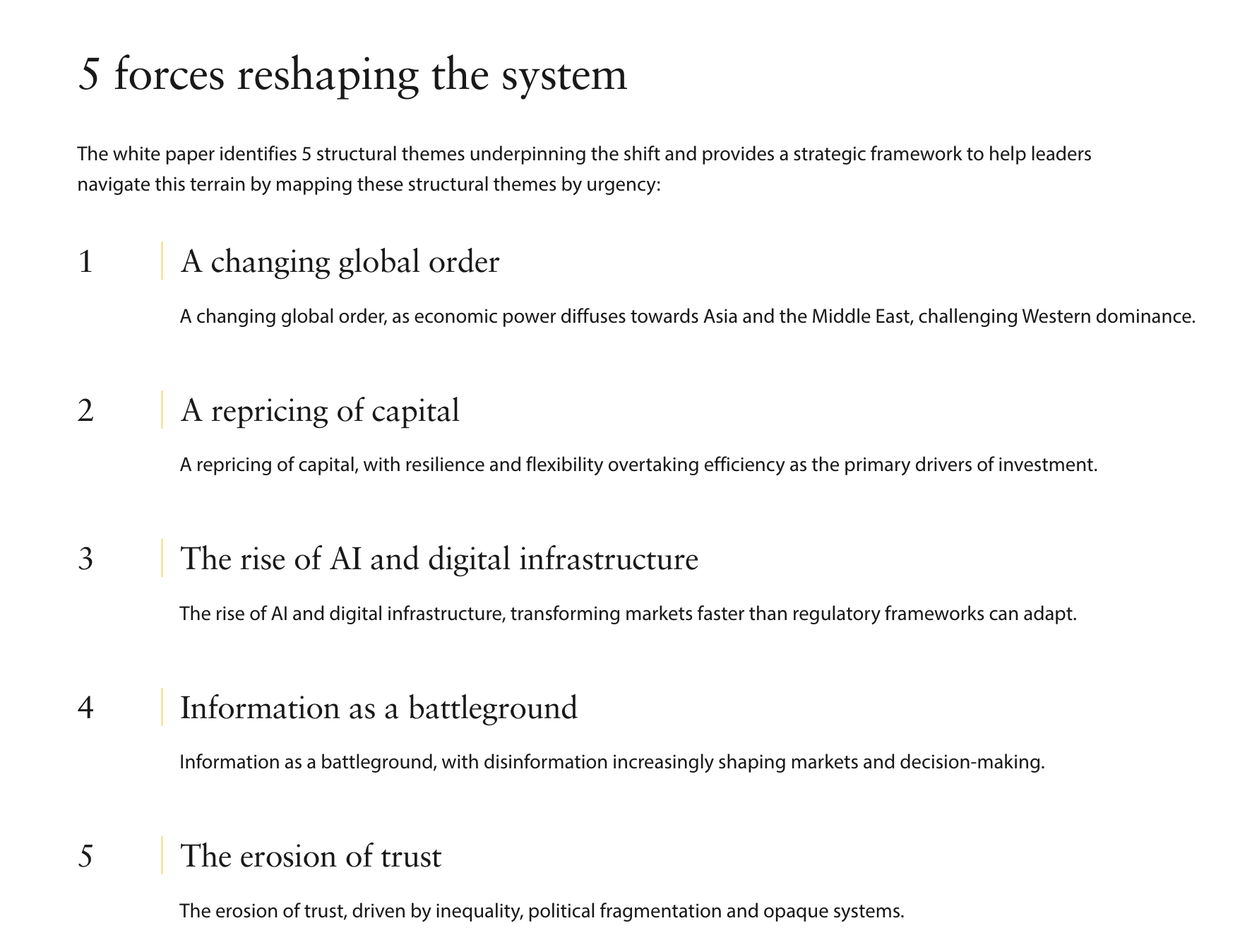
Abstract: Drawing on insights from more than 50 financial services CEOs, policymakers and academics, this paper provides a clear assessment of the forces reshaping global finance and the leadership imperatives they demand. We argue that what was once seen as cyclical volatility has become a baseline condition of complexity, requiring a fundamental rethink of leadership, governance and strategy. More specifically we identify five structural themes underpinning the shift and provides a strategic framework to help leaders navigate this terrain by mapping these structural themes by urgency: (1) a changing global order, as economic power diffuses towards Asia and the Middle East, challenging Western dominance, (2) a repricing of capital, with resilience and flexibility overtaking efficiency as the primary drivers of investment, (3) the rise of AI and digital infrastructure, transforming markets faster than regulatory frameworks can adapt, (4) information as a battleground, with disinformation increasingly shaping markets and decision-making, and (5) the erosion of trust, driven by inequality, political fragmentation and opaque systems. The shifts explored in this paper are not converging towards a new equilibrium, they are defining a permanent, baseline condition of systemic complexity, geopolitical contestation and structural change. Within this volatile environment lies immense opportunity – but only for those with the clarity to see it and the conviction to move ahead of the market. The capacity to engage constructively with this transformation, to balance innovation with responsibility, and competition with collaboration, will determine individual corporate performance, and also the broader trajectory of the global financial order.
Key Words: Power, capital, governance, leadership, AI, disinformation, trust.
Cambridge Working Paper Version: The paper is available here.
YouTube Video: Watch a short video with some of the key messages here.
Technology, Transformation and Governance: Leadership in an Emerging Order, with Jennifer Waller Martin, Feryal Erhun, Nishma Gosrani, and Tracey Horn (September 2026).
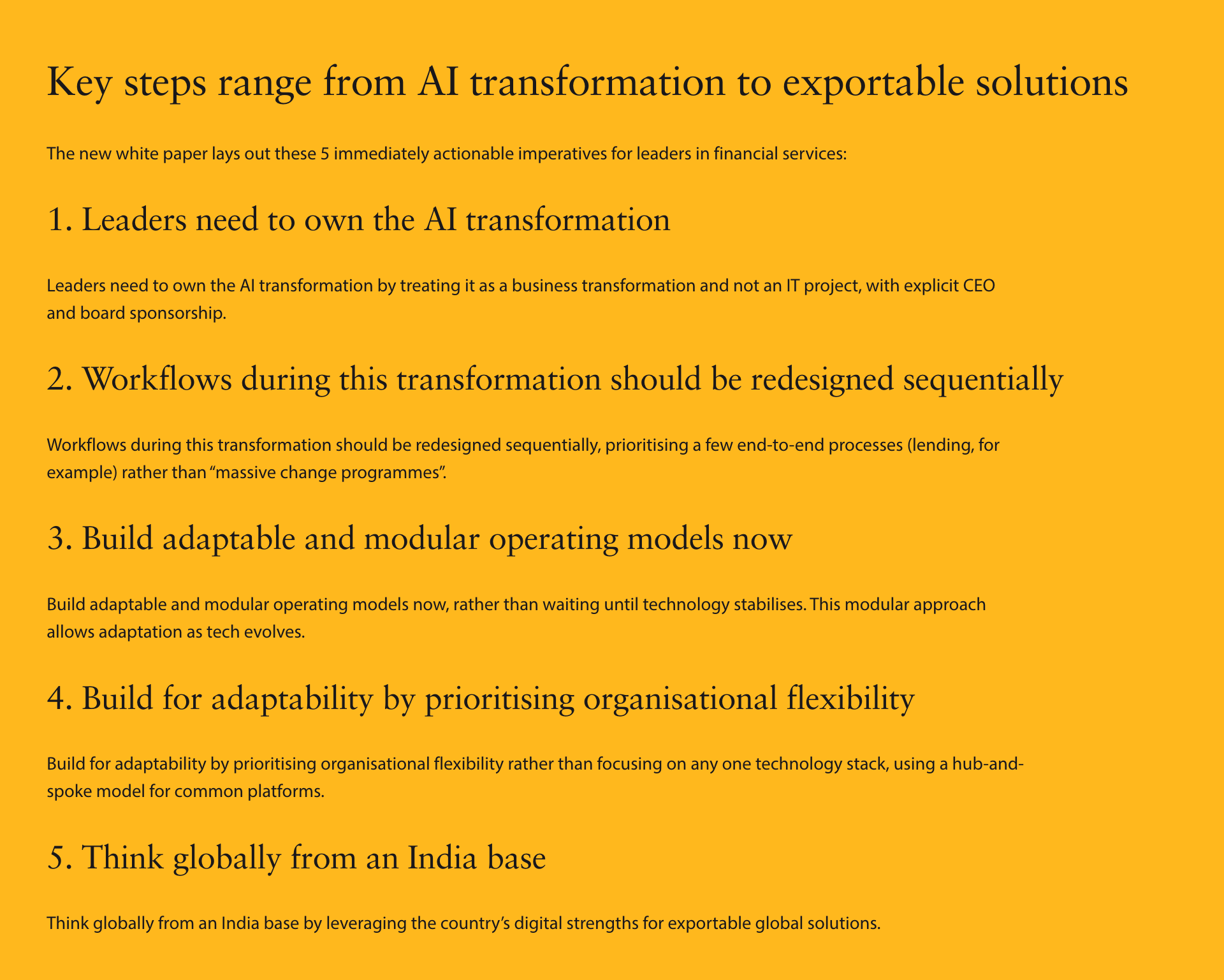
Abstract: In Power, Capital and Governance: Leadership in a Fragmented World we set out the argument that fragmentation, geopolitical and institutional, has made leadership quality rather than access to information the decisive competitive variables. In this paper we do not restate that argument, instead we tests it against India, and specifically against the conversations that took place at the Stratos India Forum in Mumbai, where sixty of the region’s most senior financial services leaders sat with policymakers, regulators and investors to examine what fragmentation and technological acceleration actually demand of an institution once the strategy papers are closed and the operating decisions begin. India is a useful testing ground precisely because its contradictions are so legible: an economy attracting record bond inflows even as equity investors withdrew capital; a financial sector modernising its governance even as ownership and management remain, in too many institutions, insufficiently distinct; a technology sector with genuine strength in AI application and a genuine, structural weakness in the compute and infrastructure layers beneath it. None of these tensions are unique to India. They are, I would argue, the defining tensions of global financial services in 2026, simply visible here first and most starkly. Where the first paper in this series asked leaders to recognise that boards must now govern systems they do not fully see, this paper asks a harder and more operational question: what does that governance discipline actually require of an AI transformation agenda, a capital plan, and a workforce, in the next eighteen months rather than the next decade? The answer we heard repeatedly at the Forum was that the constraint is rarely technical. It is organisational – a matter of whether leaders are willing to own transformation rather than delegate it, and whether governance structures are designed for judgement under uncertainty rather than compliance after the fact.
Key Words: Technology, transformation, governance, leadership, AI, emerging economies.
Cambridge Working Paper Version: The paper is available here.
Leadership Summits and CEO Forums
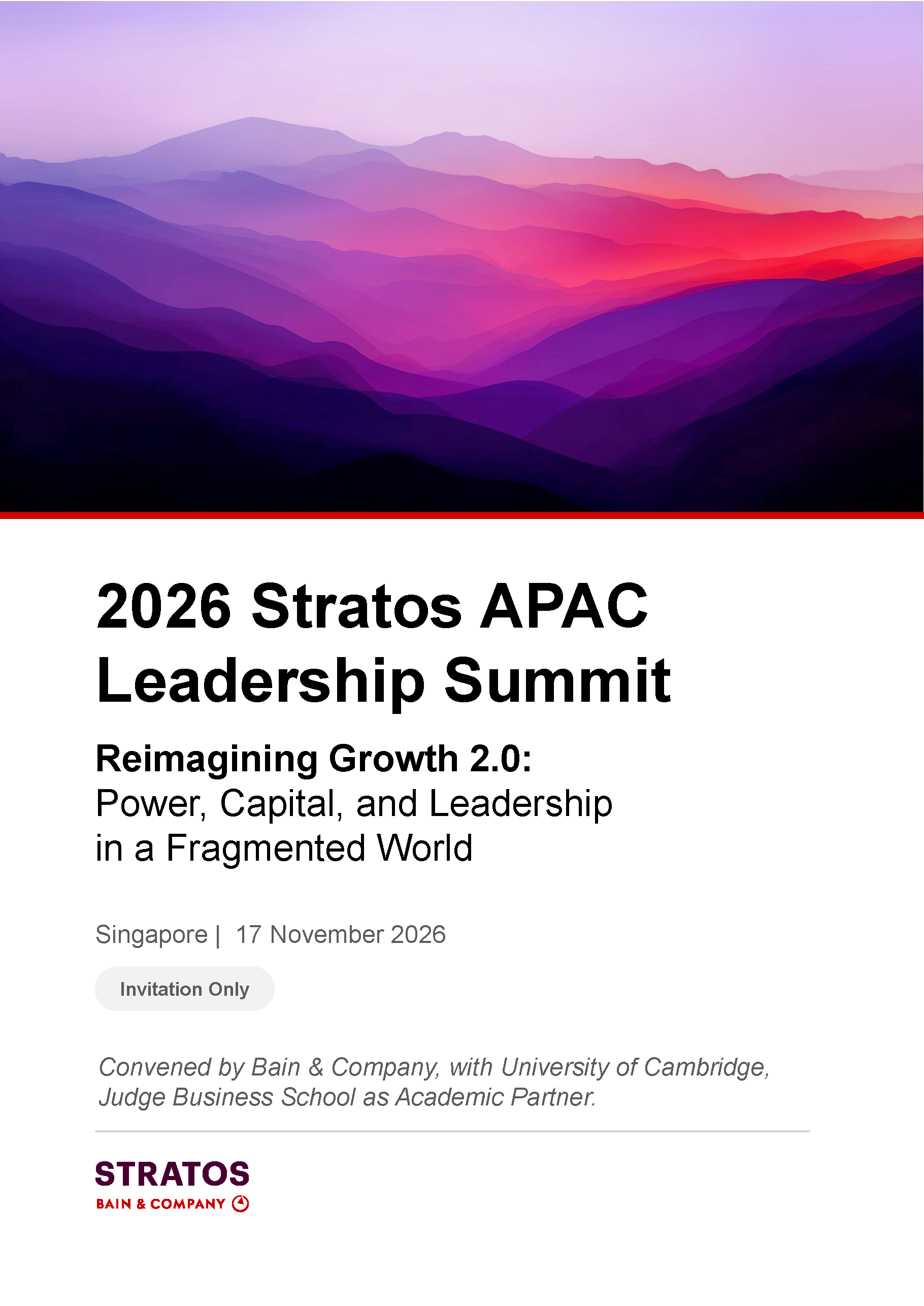
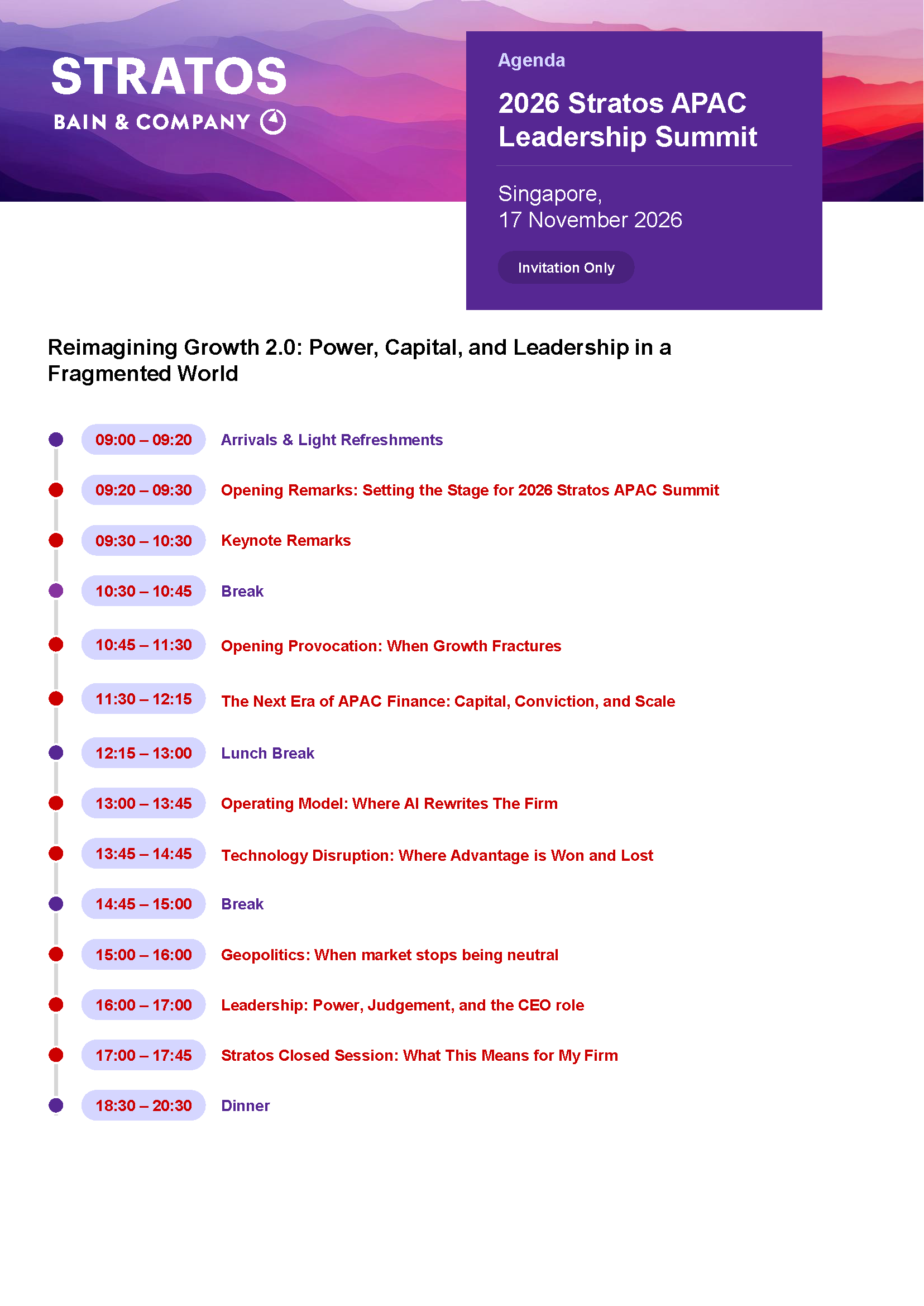
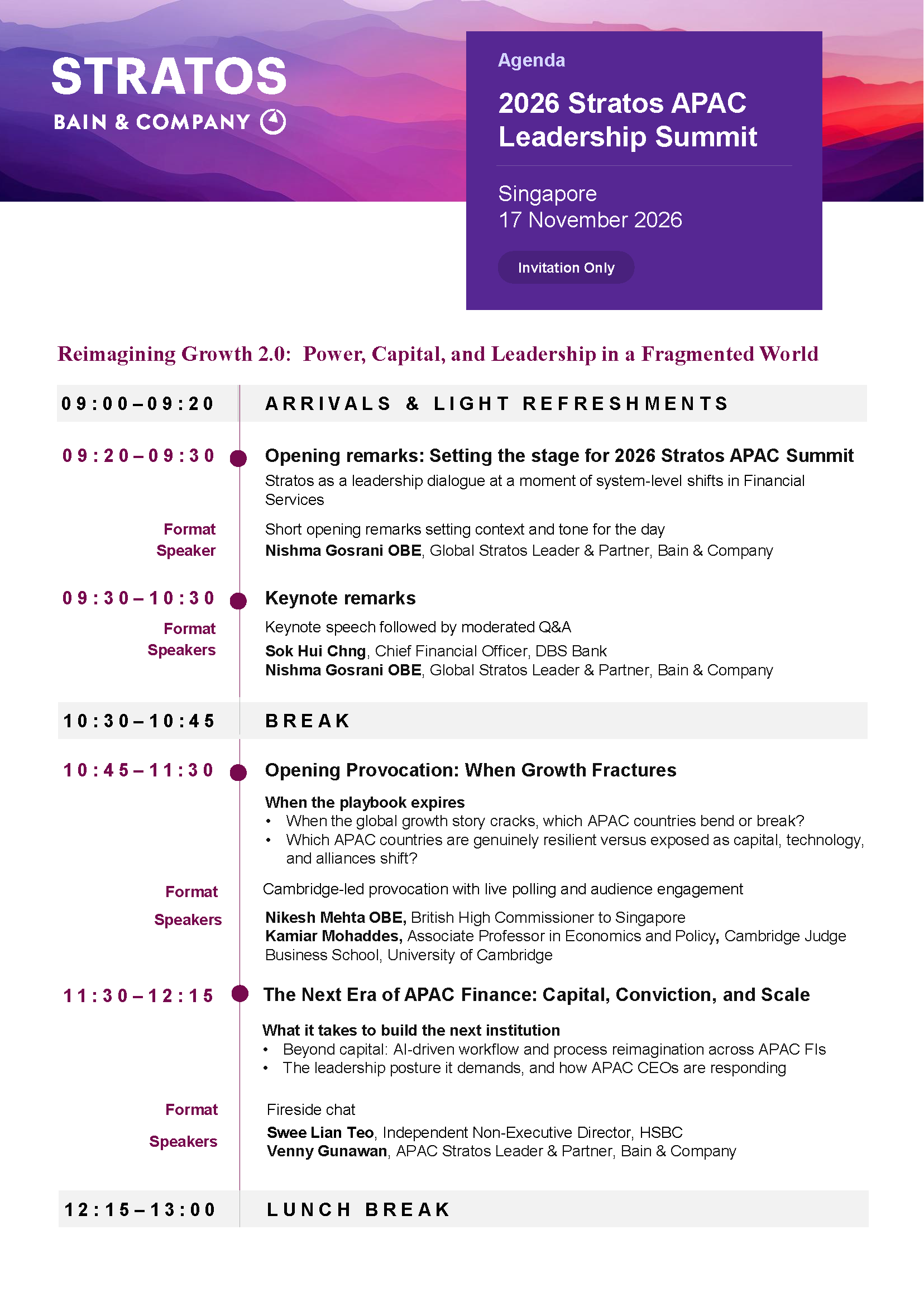
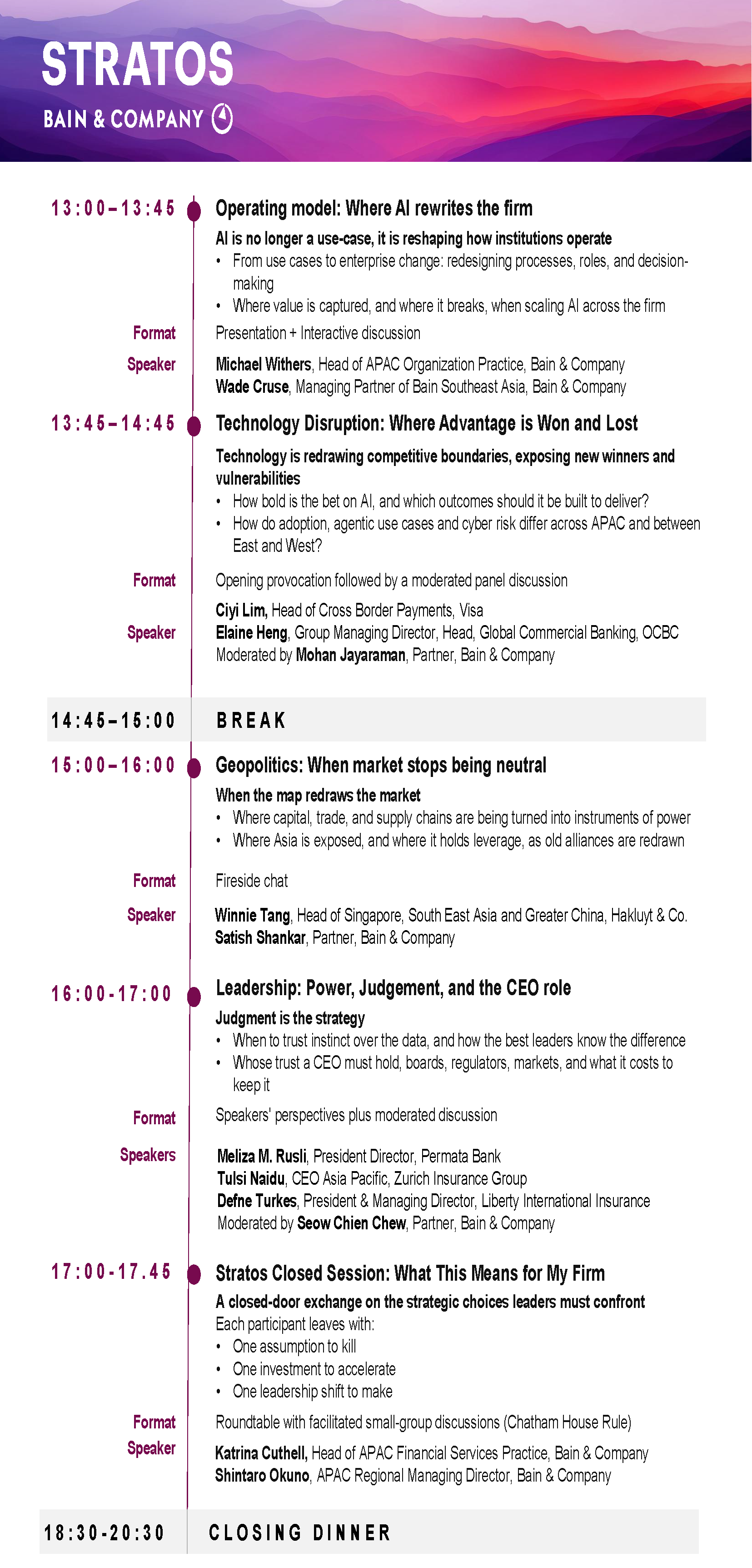
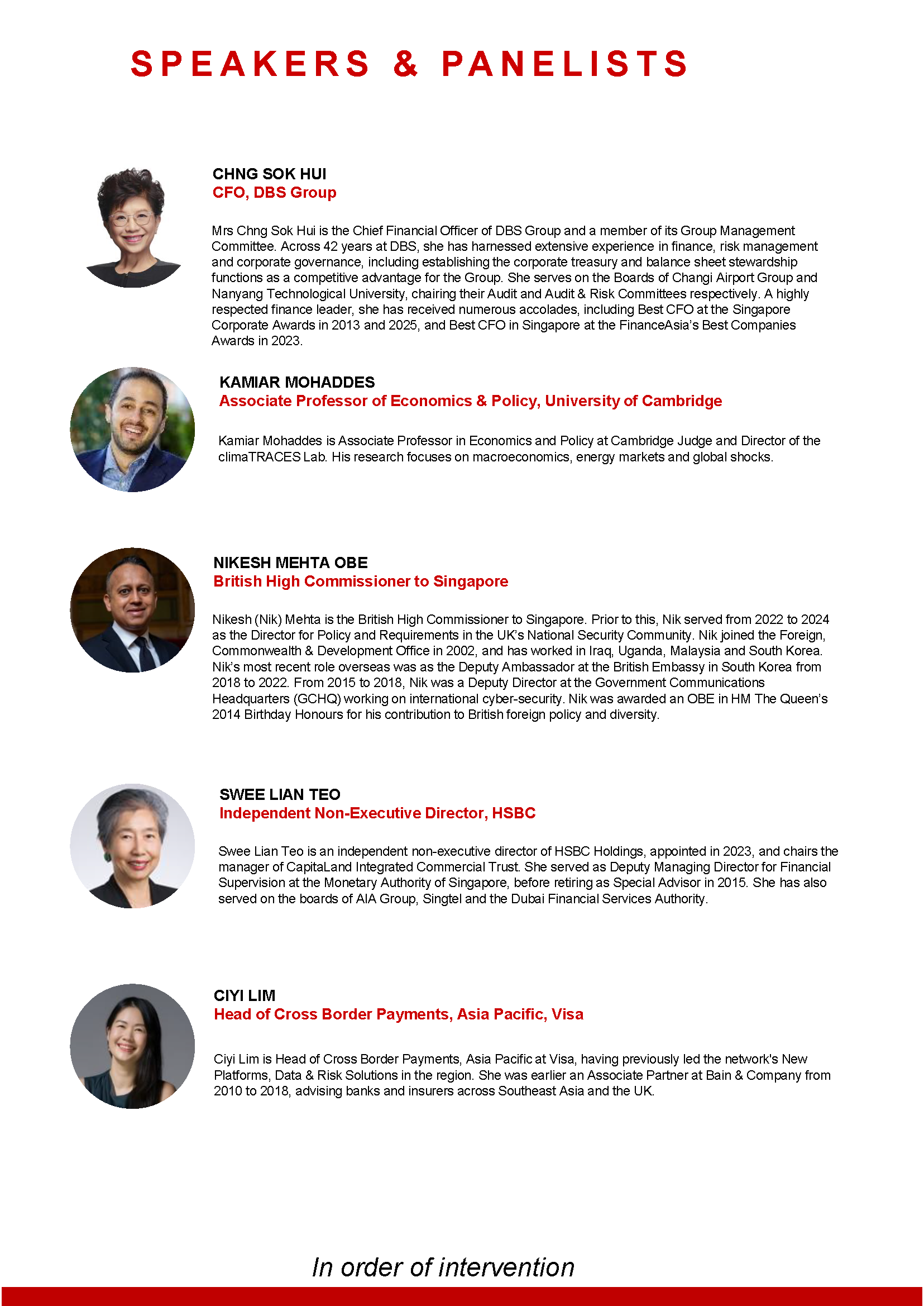
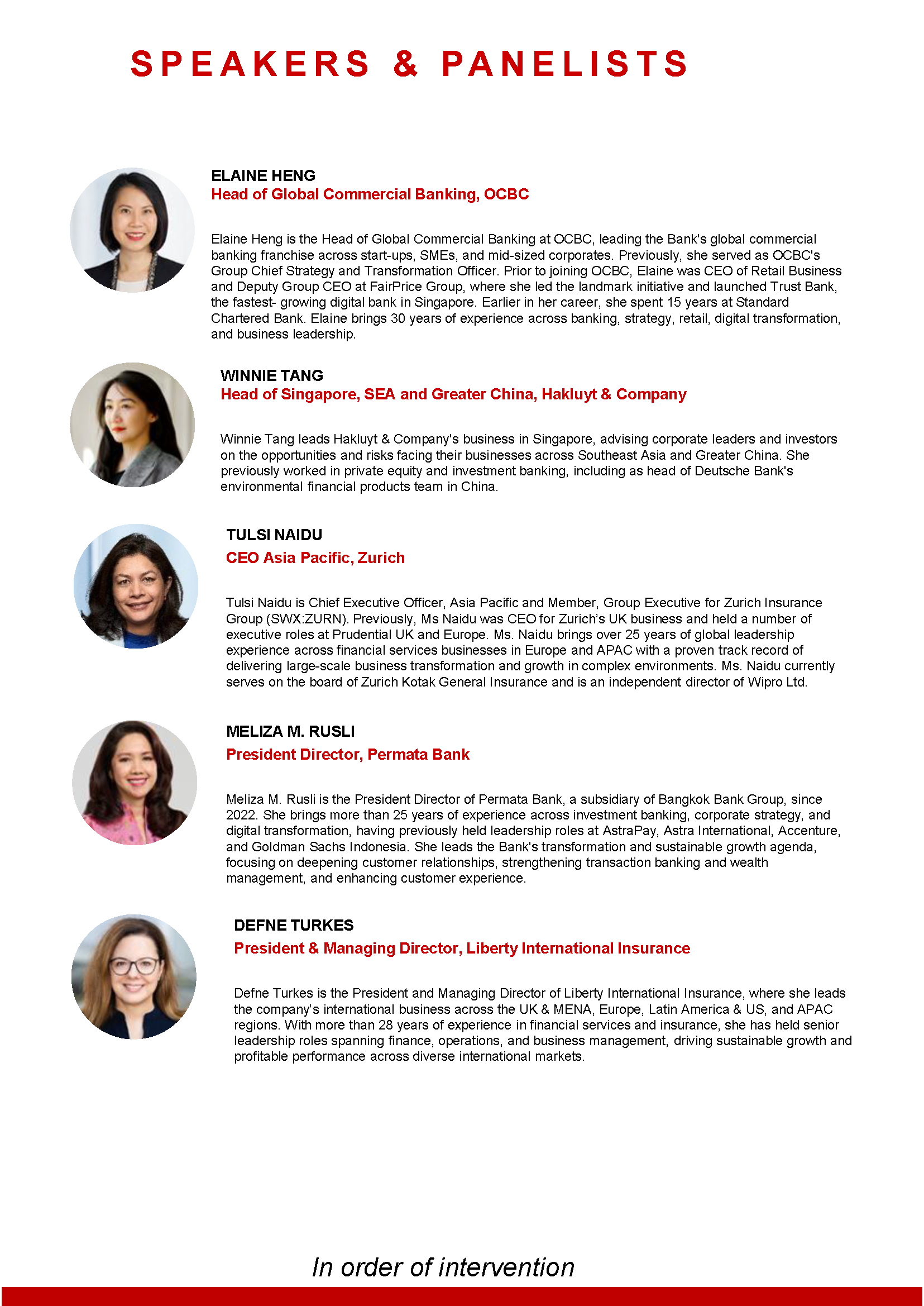
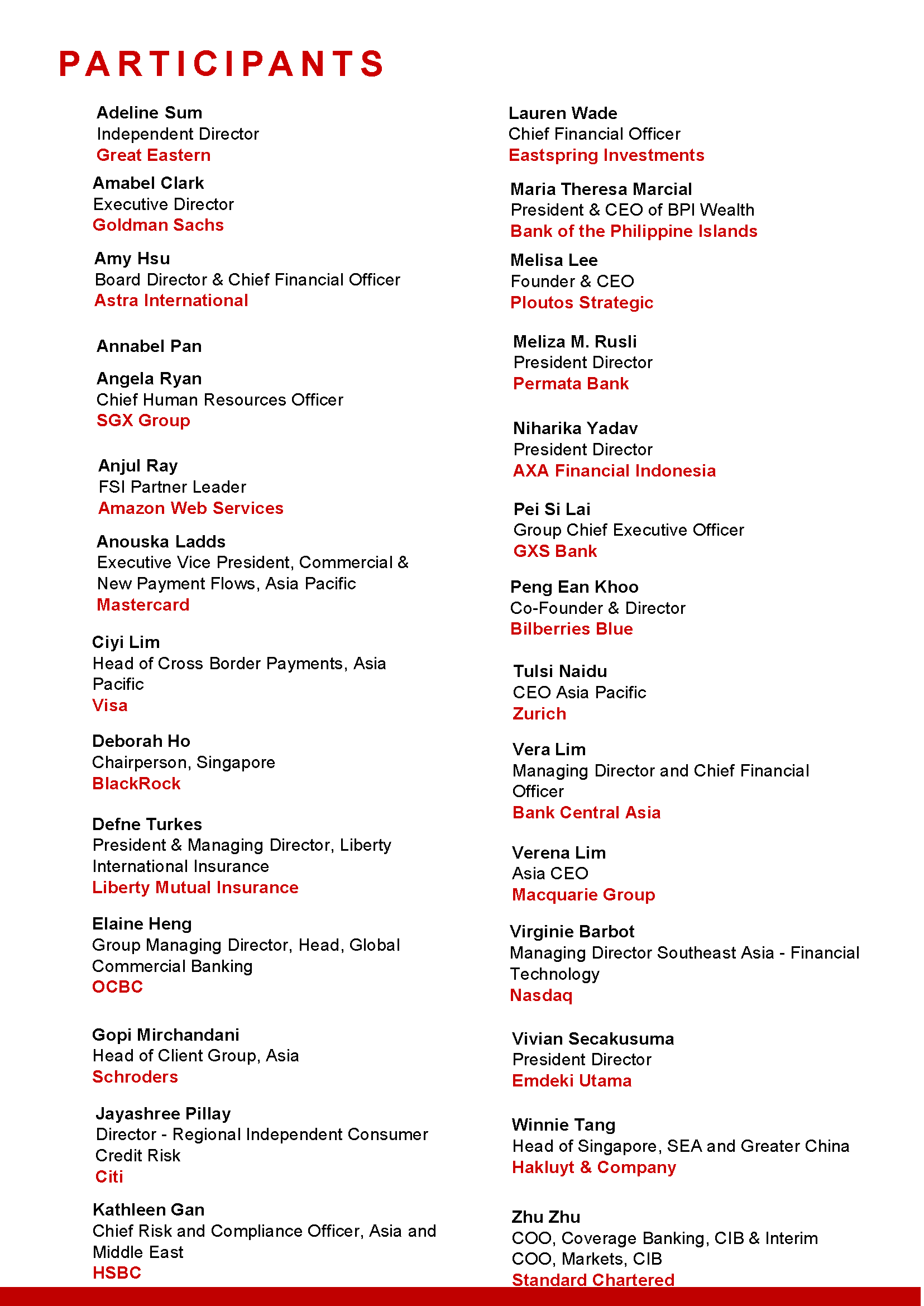
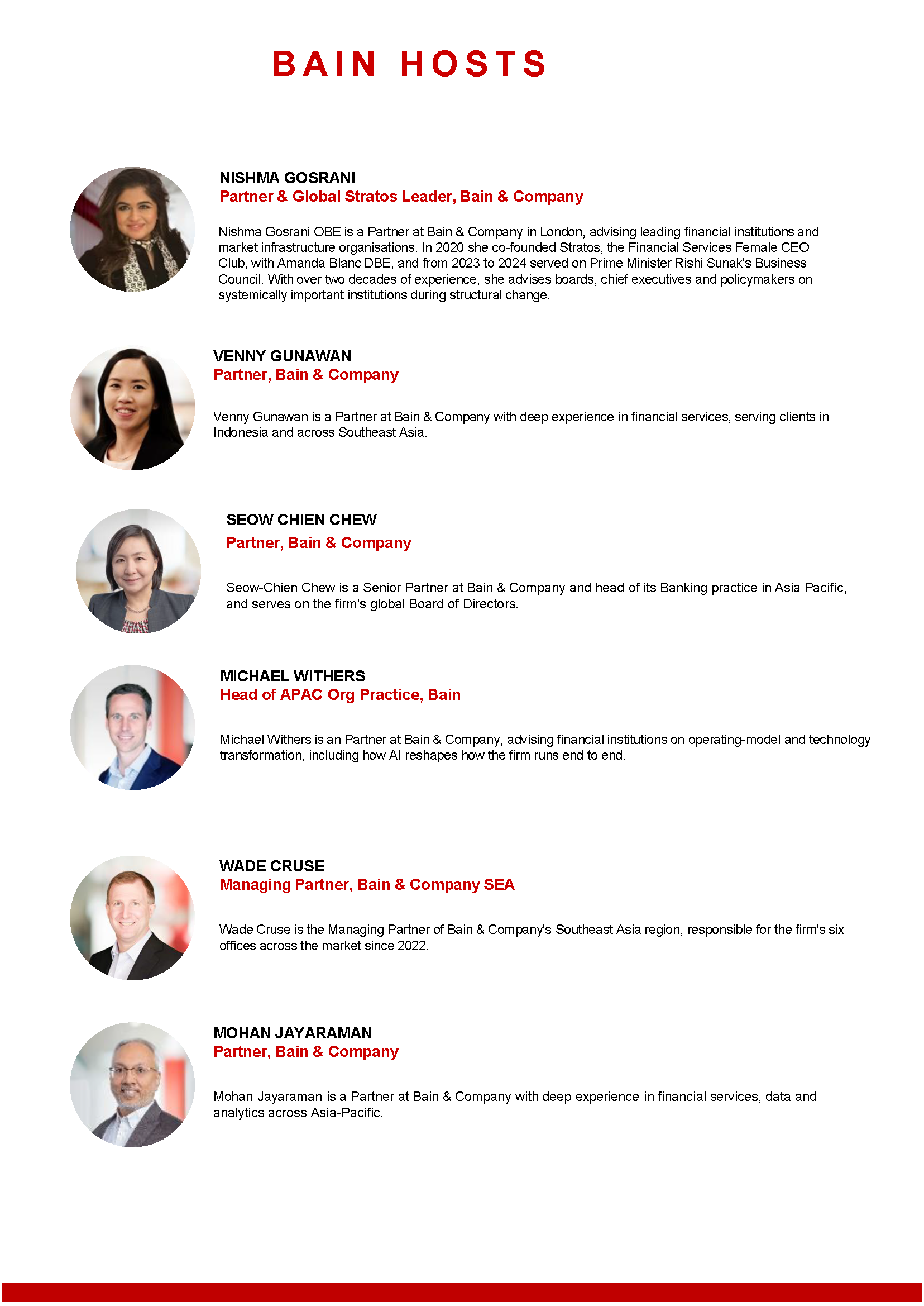
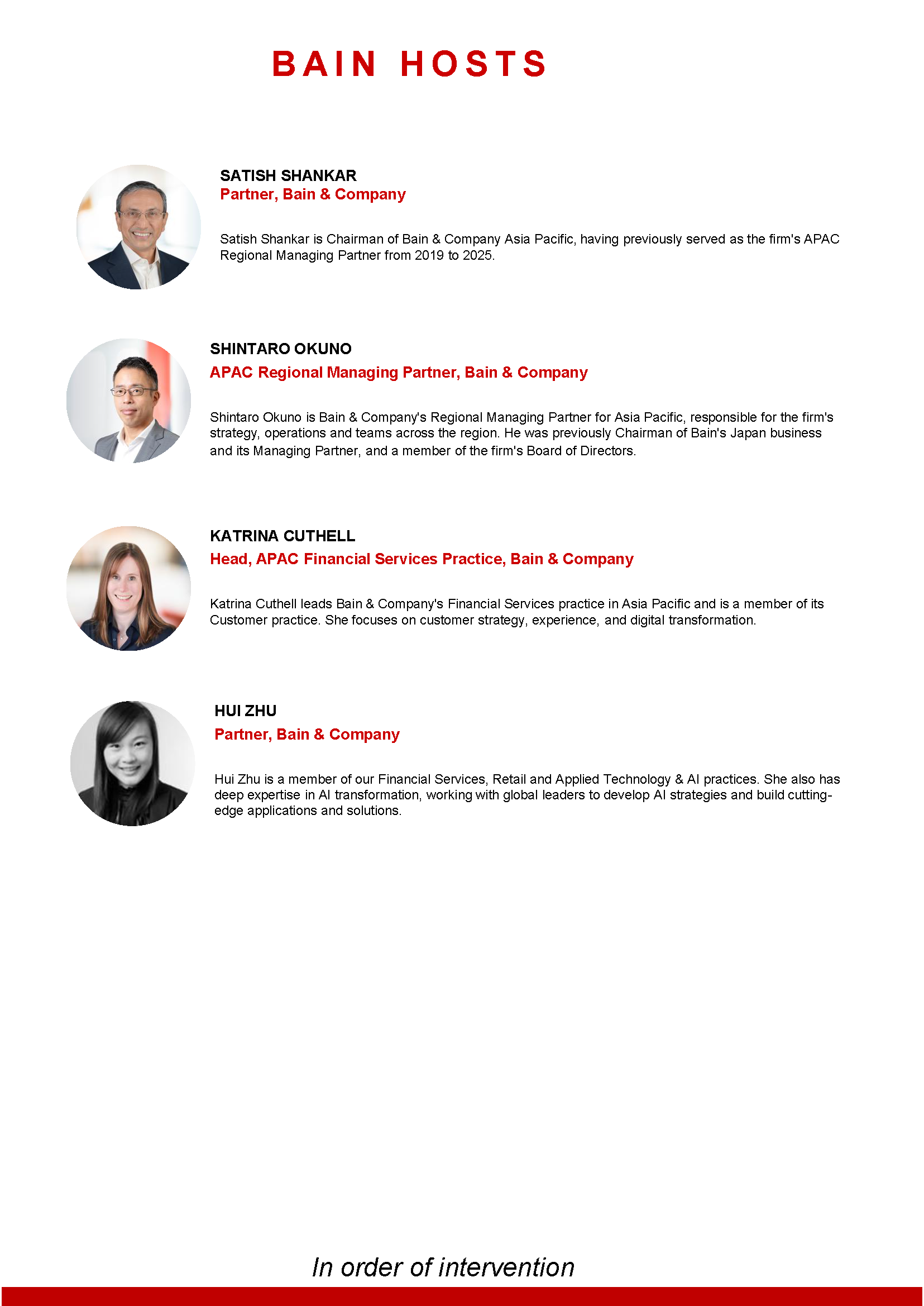
2026 Stratos APAC Leadership Summit
Reimagining Growth 2.0: Power, Capital, and Leadership in a Fragmented World
Swissotel, Singapore | November 17, 2026

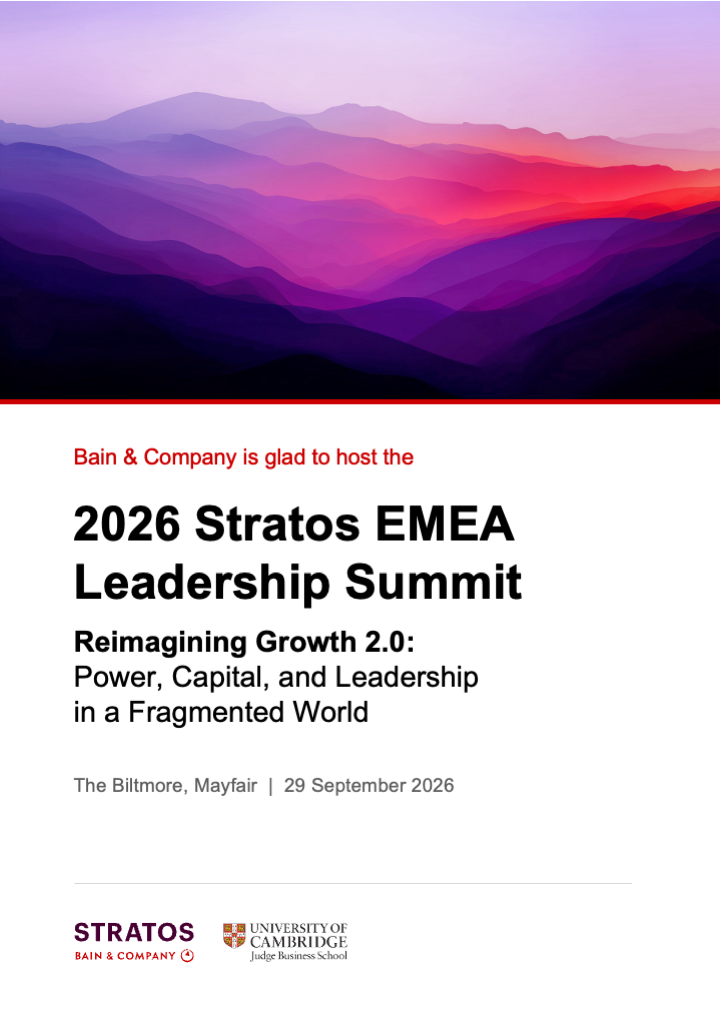
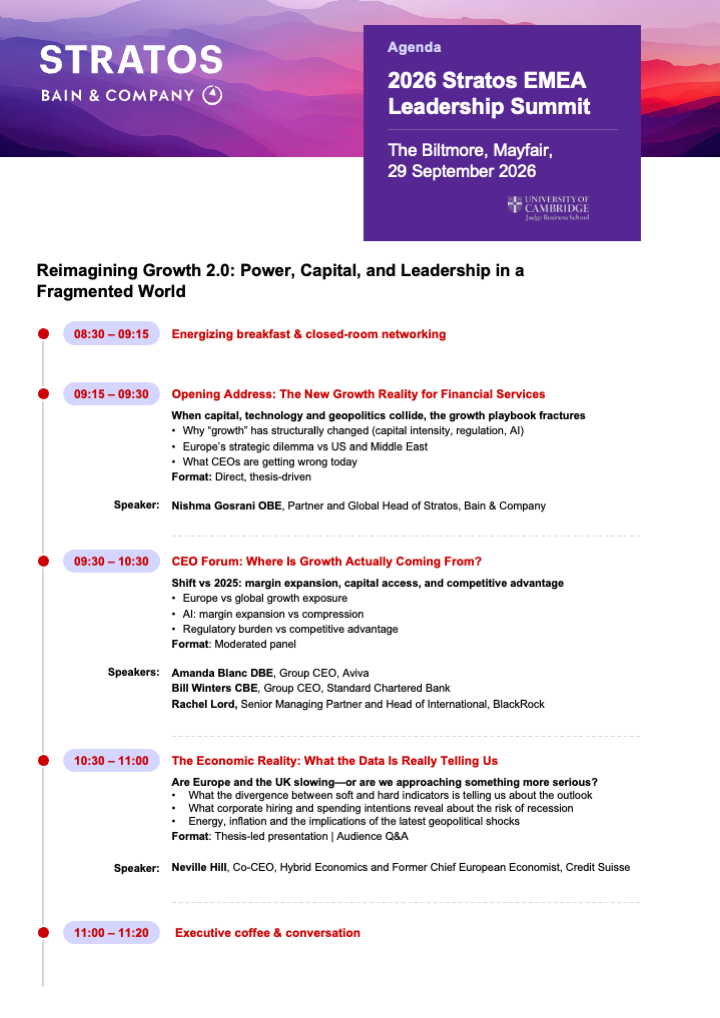
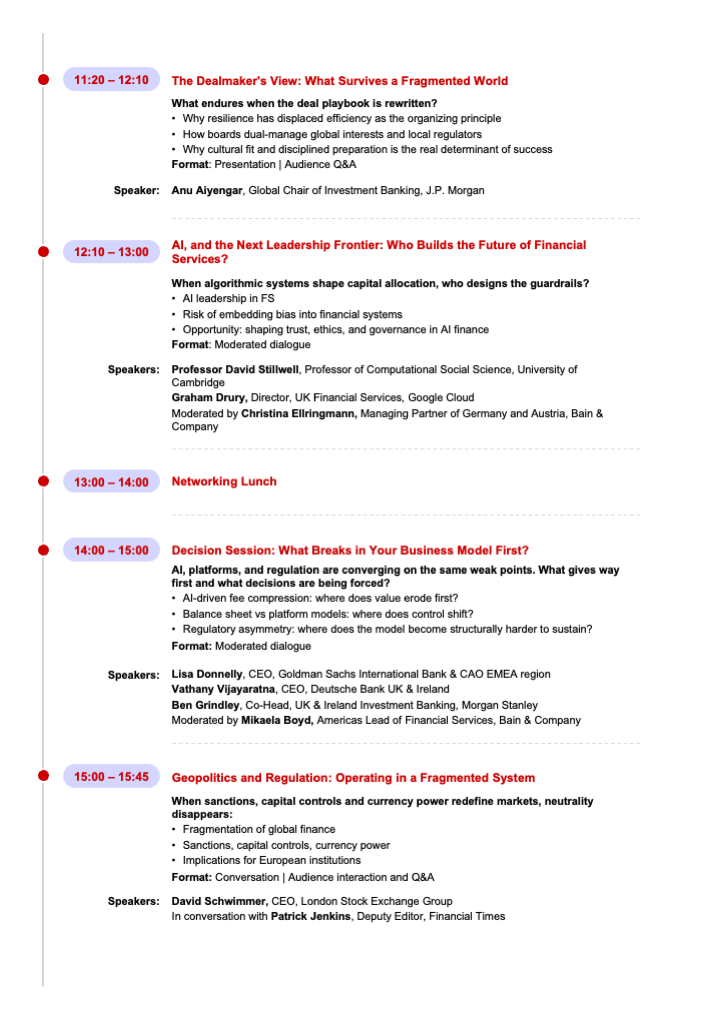
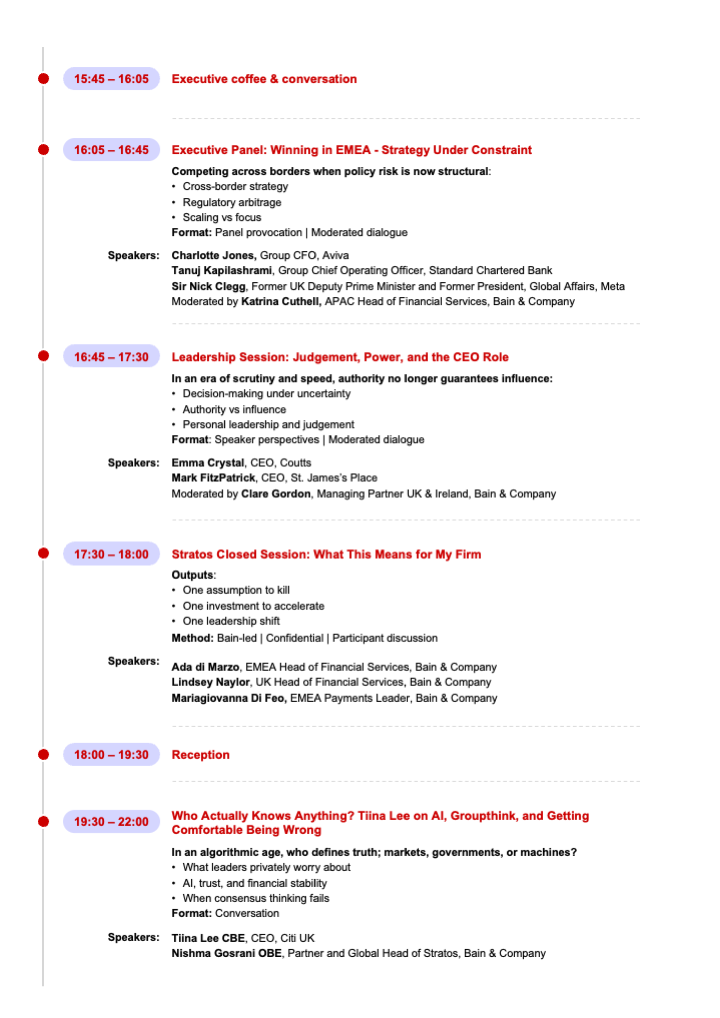
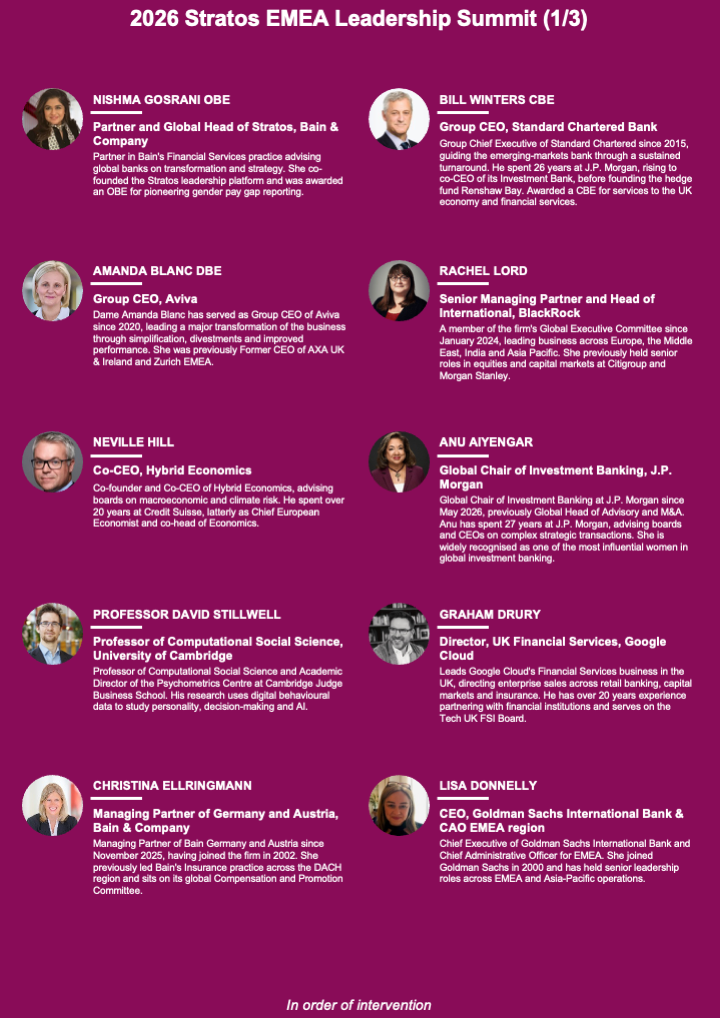
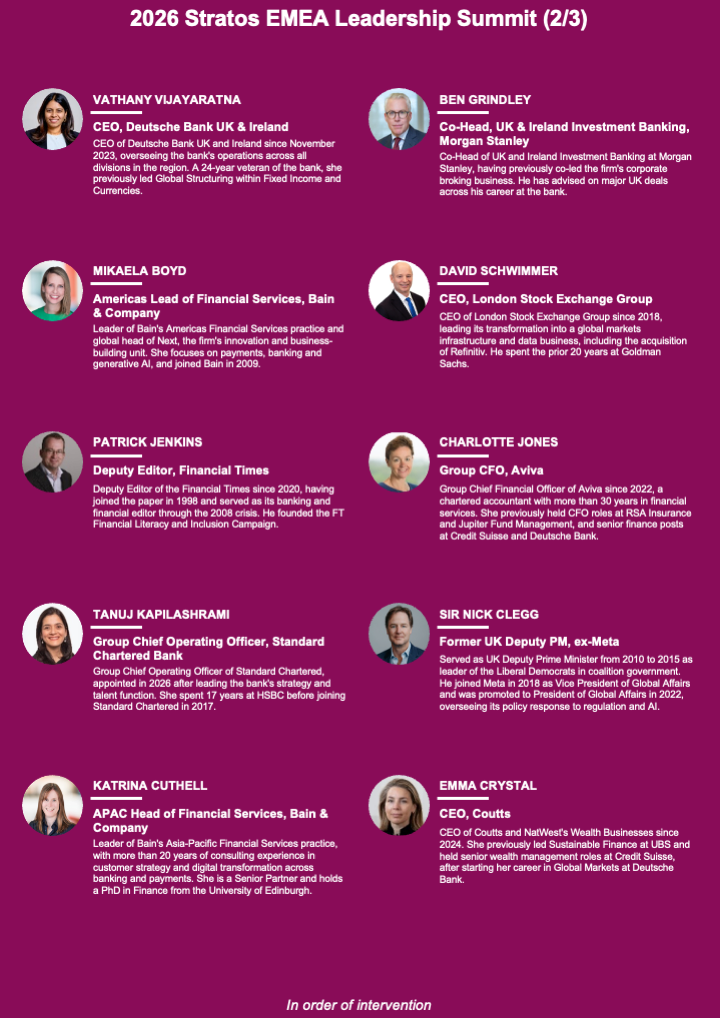
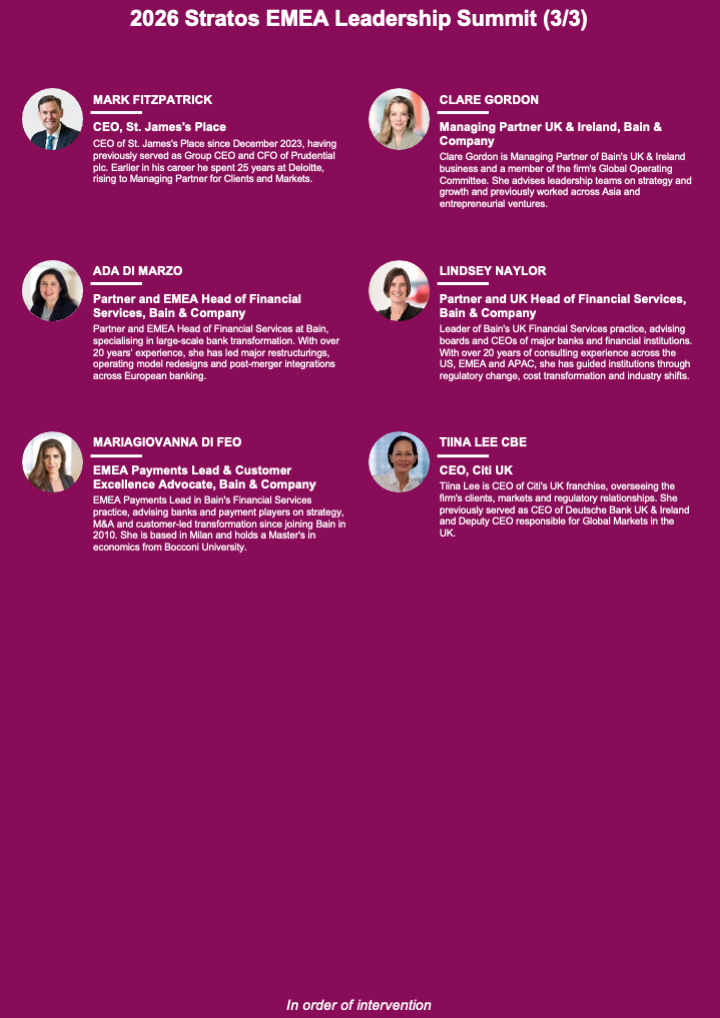
2026 Stratos EMEA Leadership Summit
Reimagining Growth 2.0: Power, Capital, and Leadership in a Fragmented World
The Biltmore, Mayfair | September 29, 2026
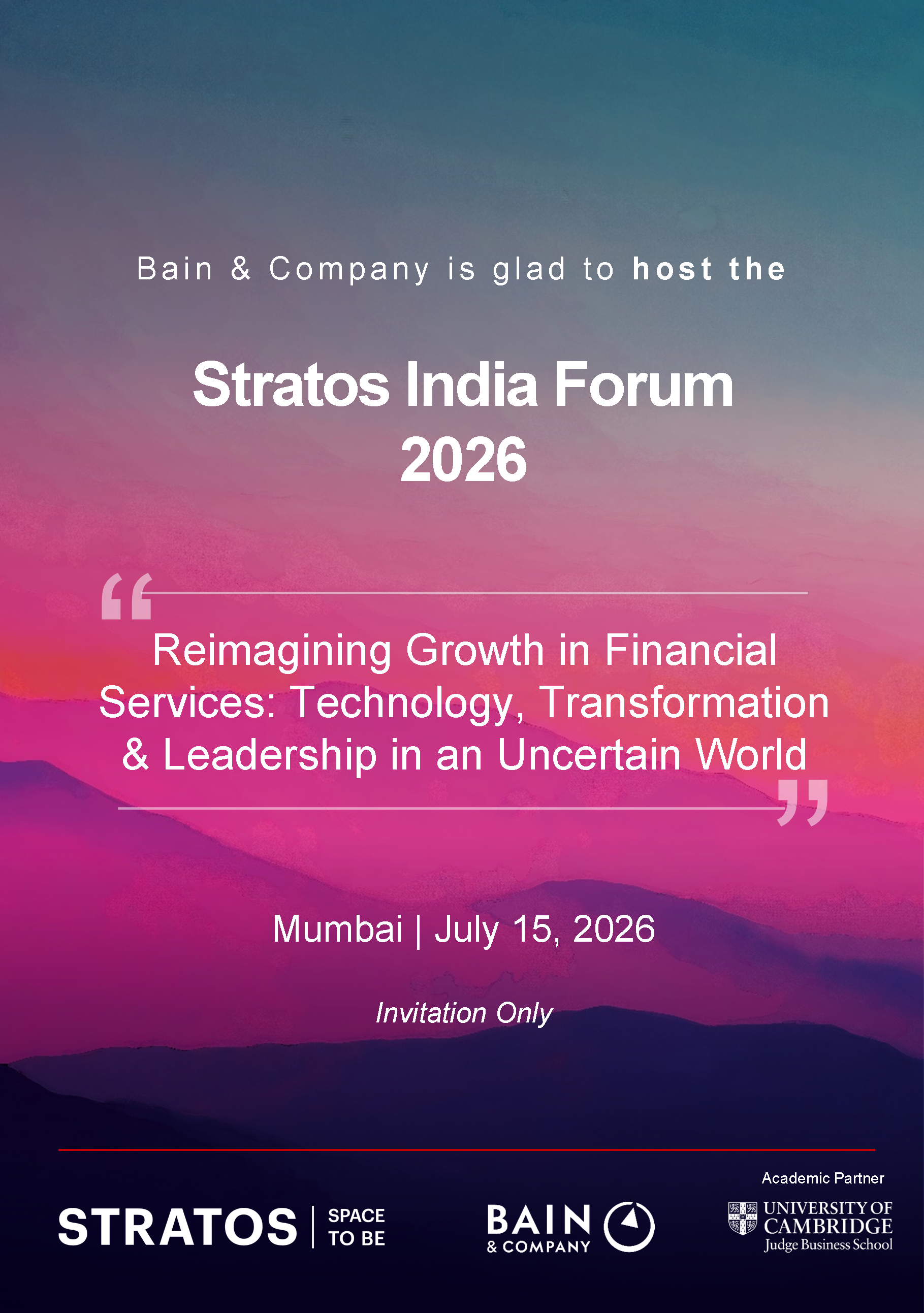
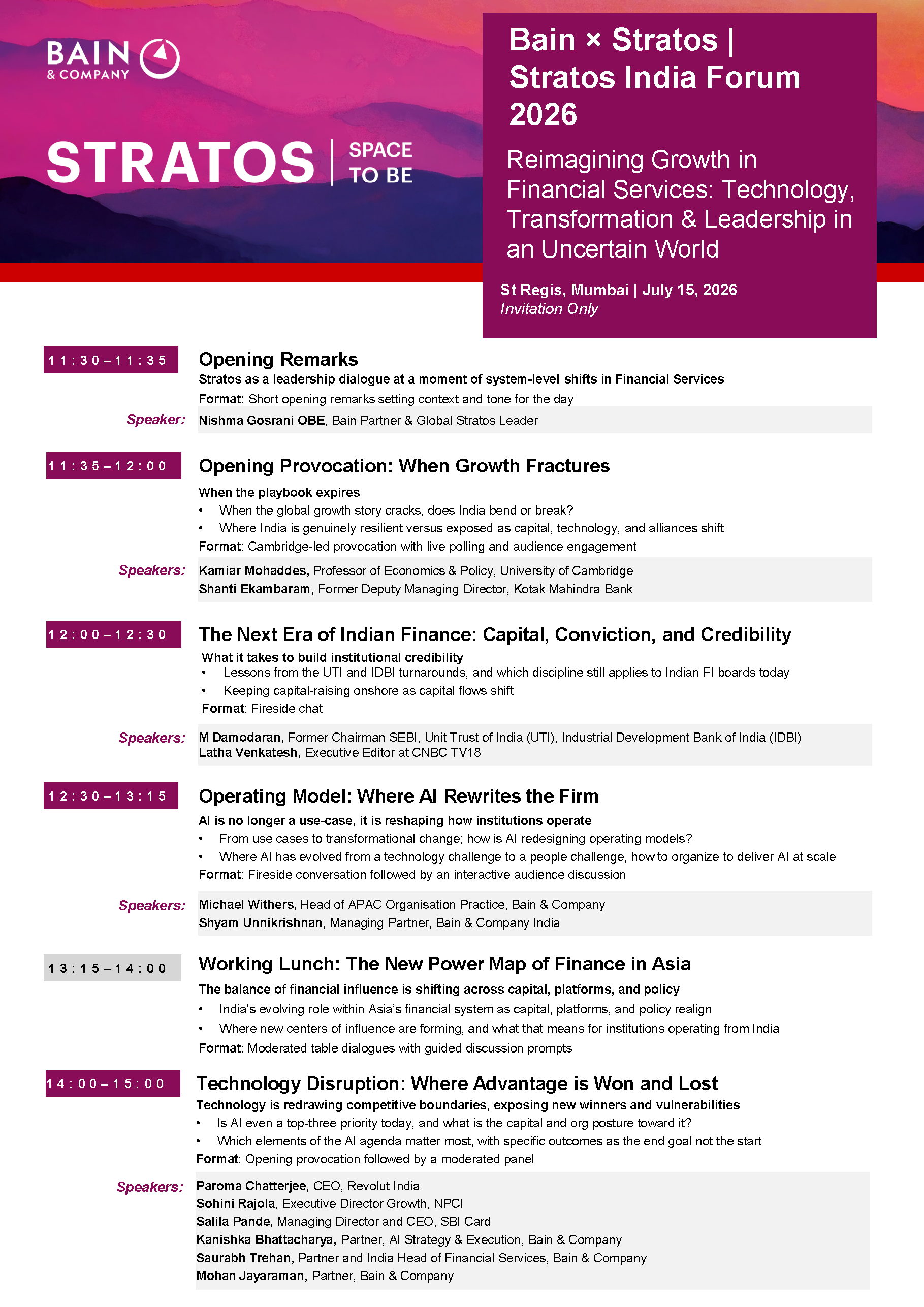
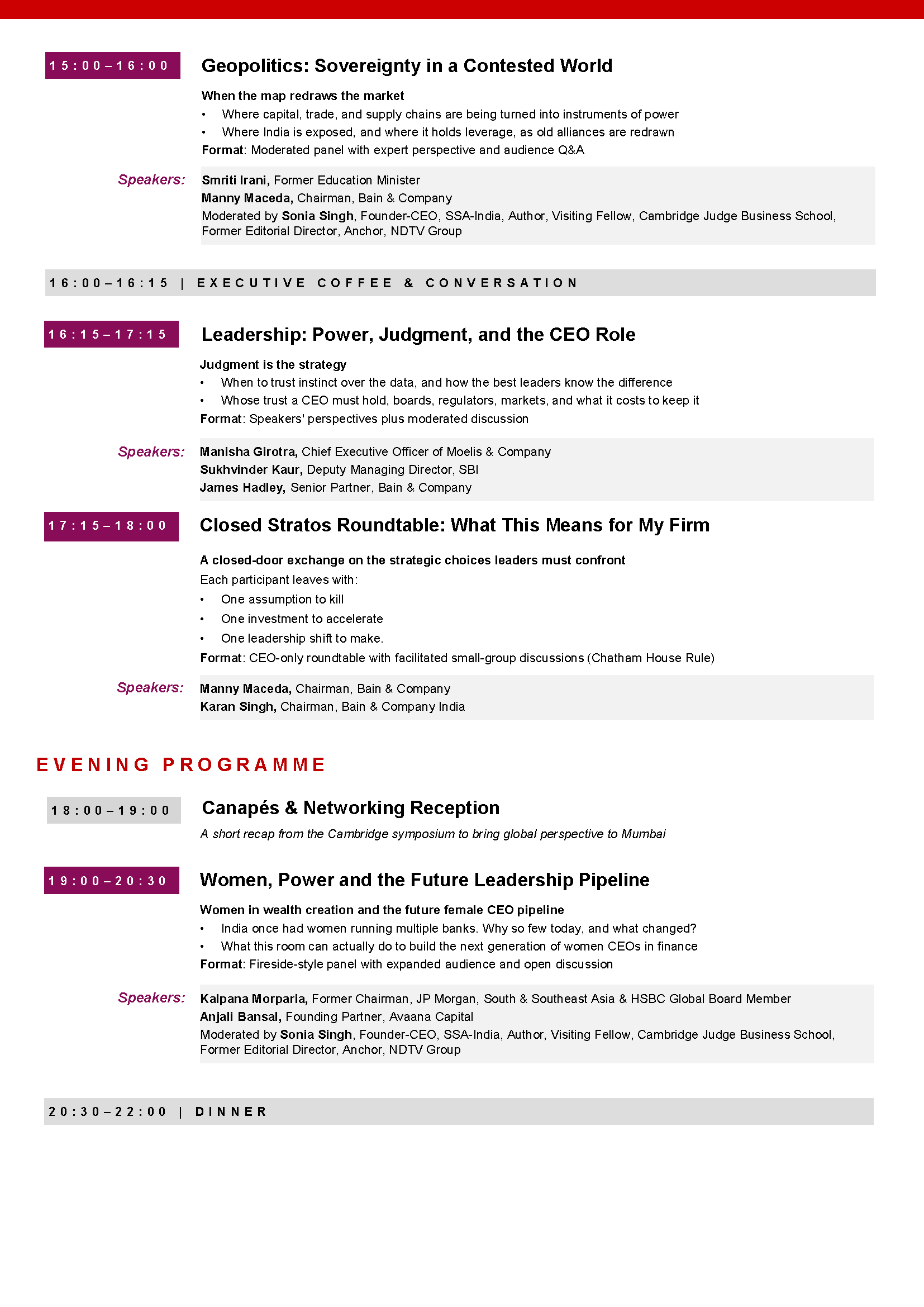
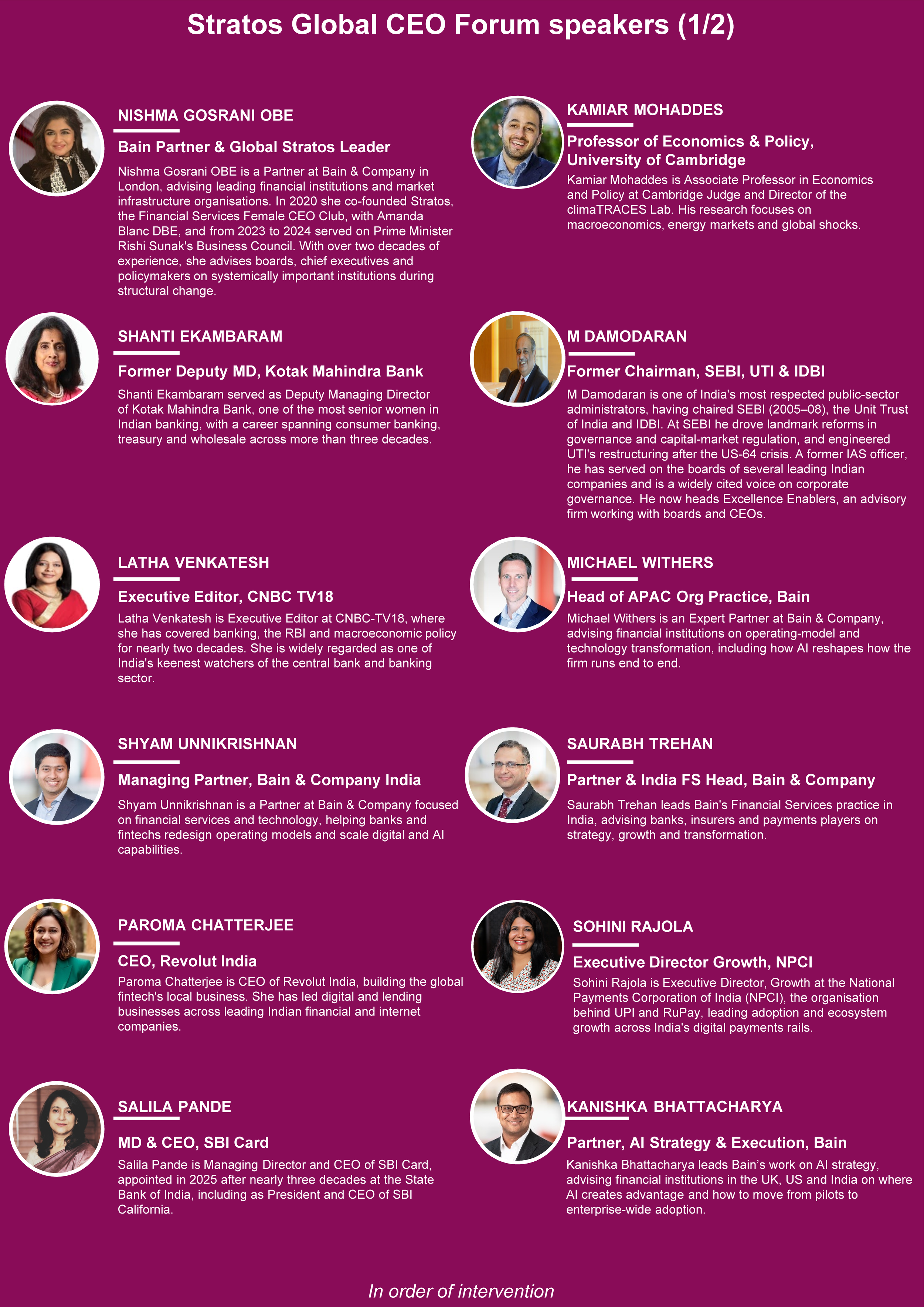
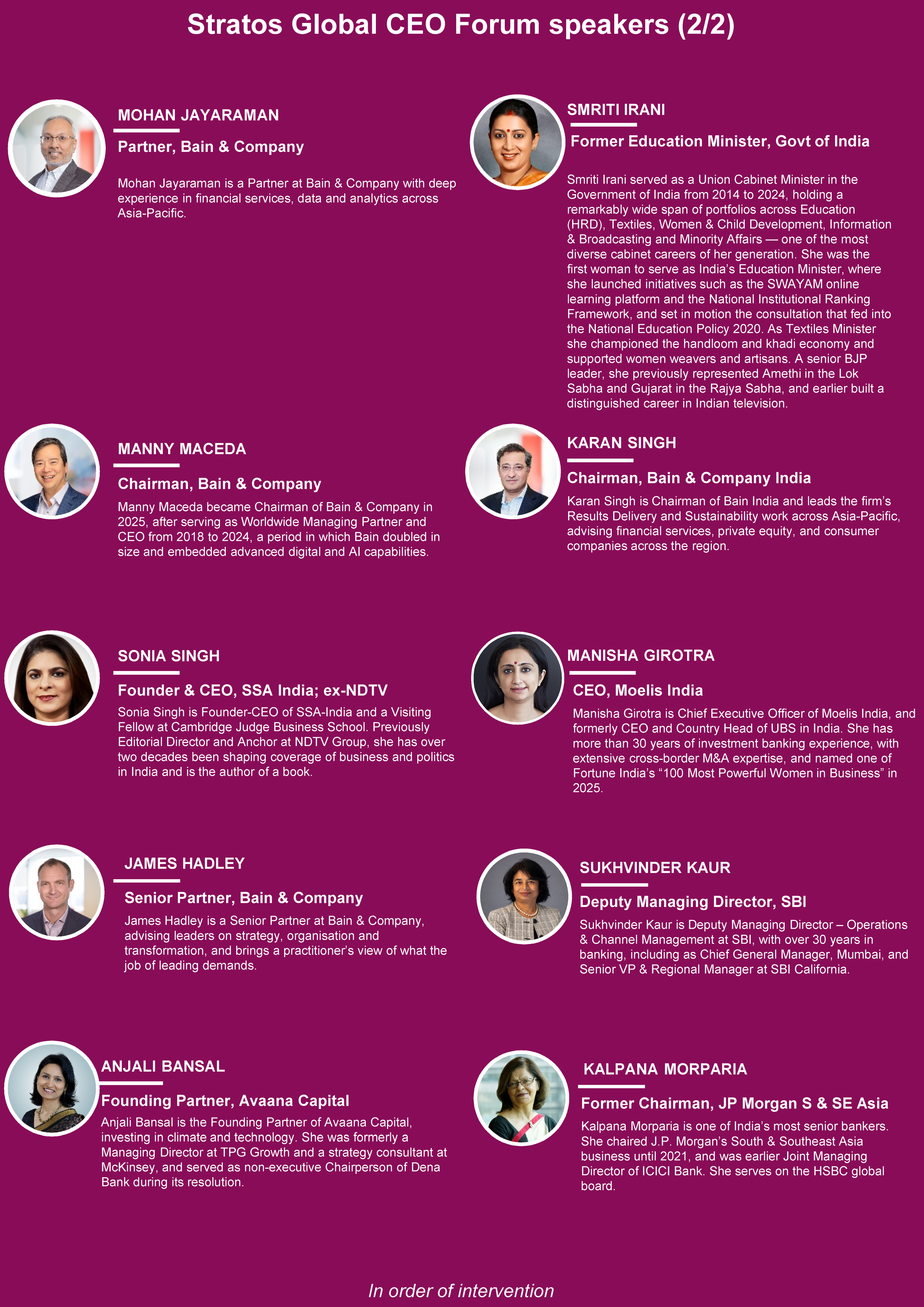
Stratos India Forum 2026
Reimagining Growth in Financial Services: Technology, Transformation & Leadership in an Uncertain World
St Regis, Mumbai | July 15, 2026

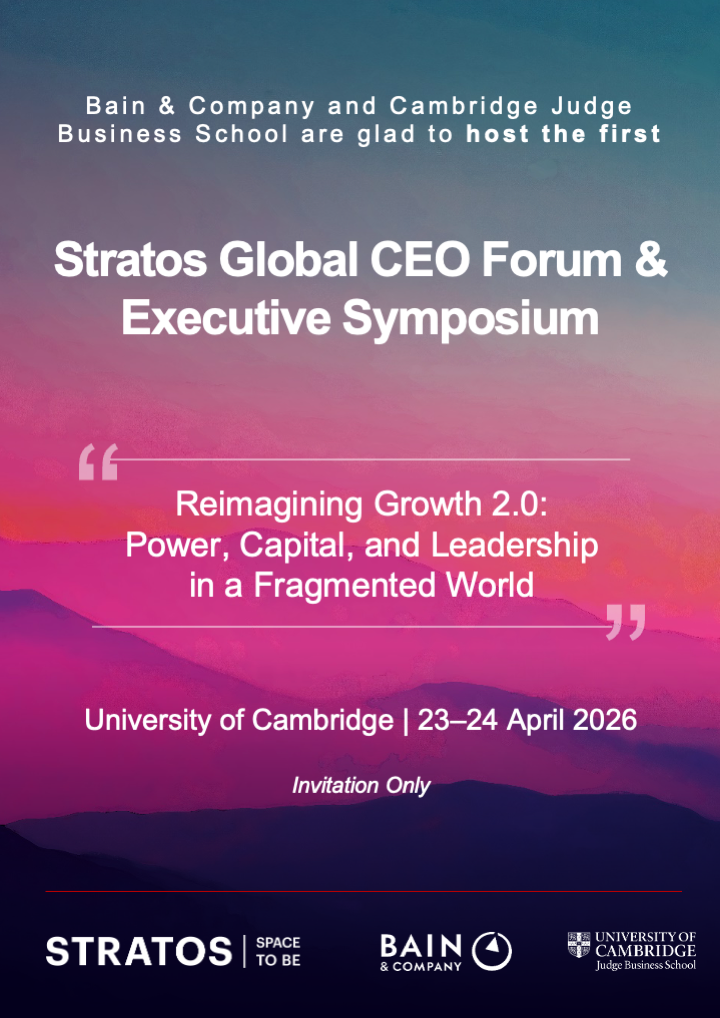
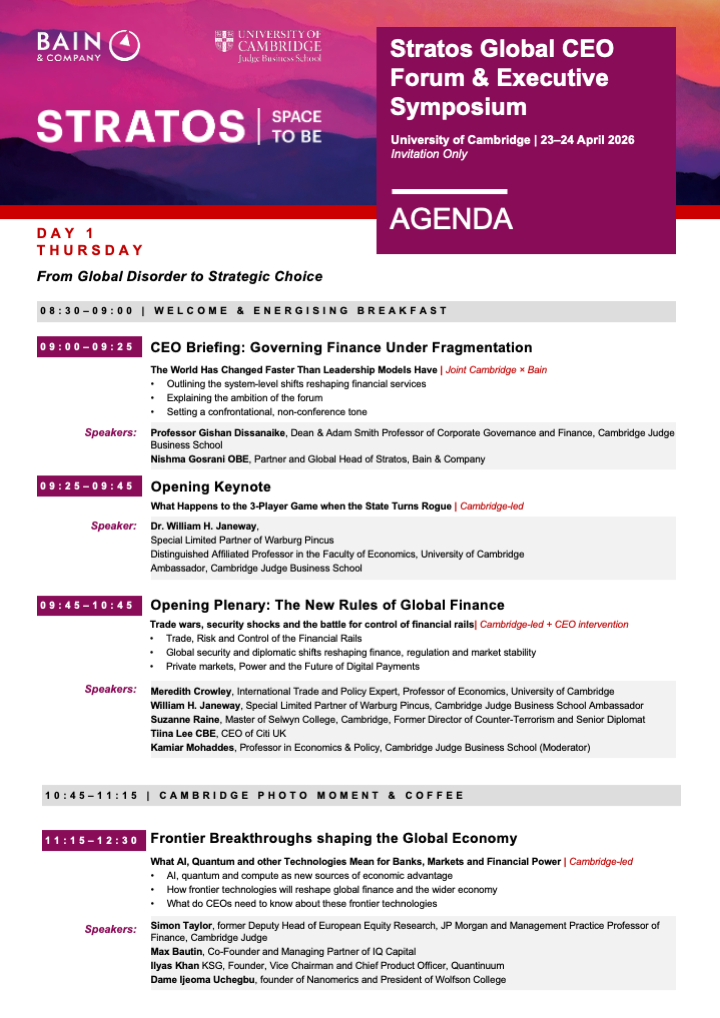
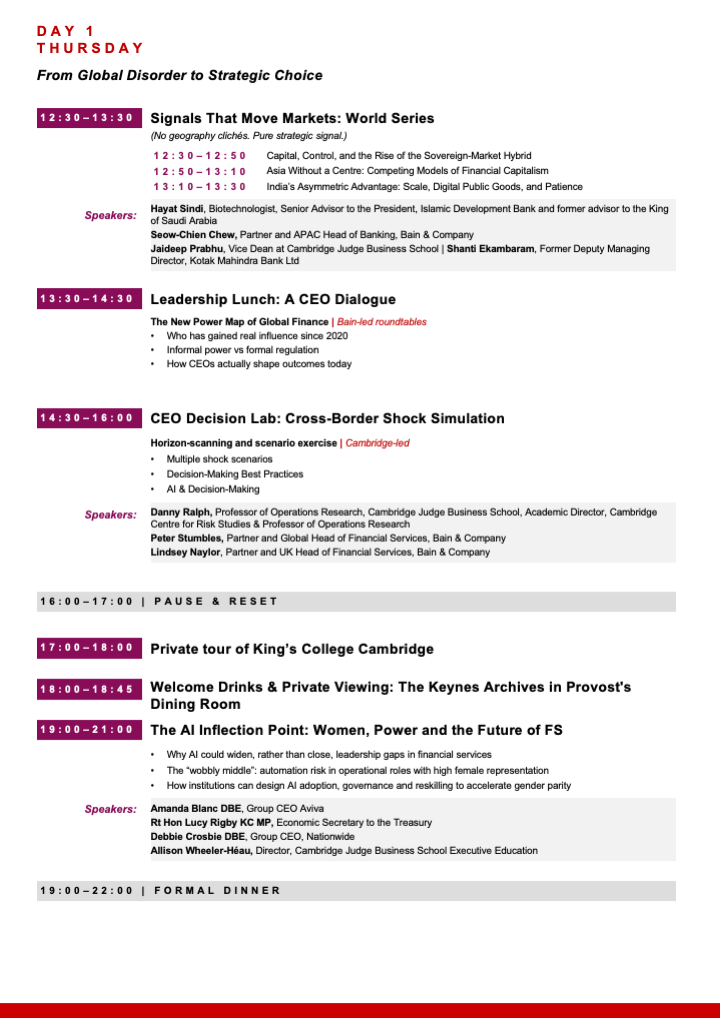
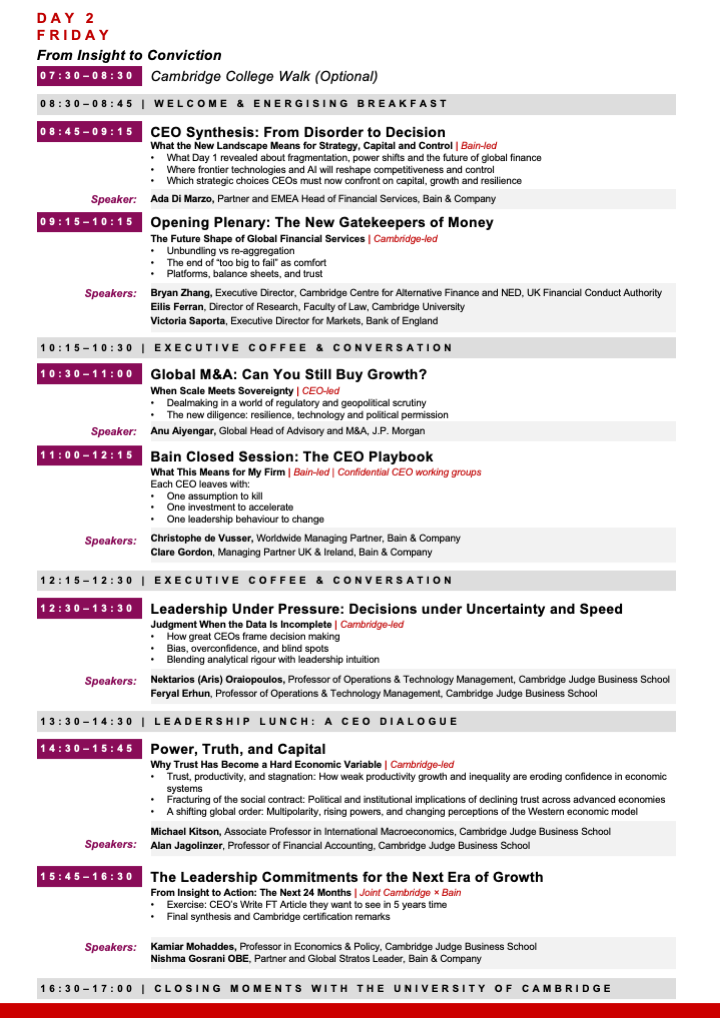
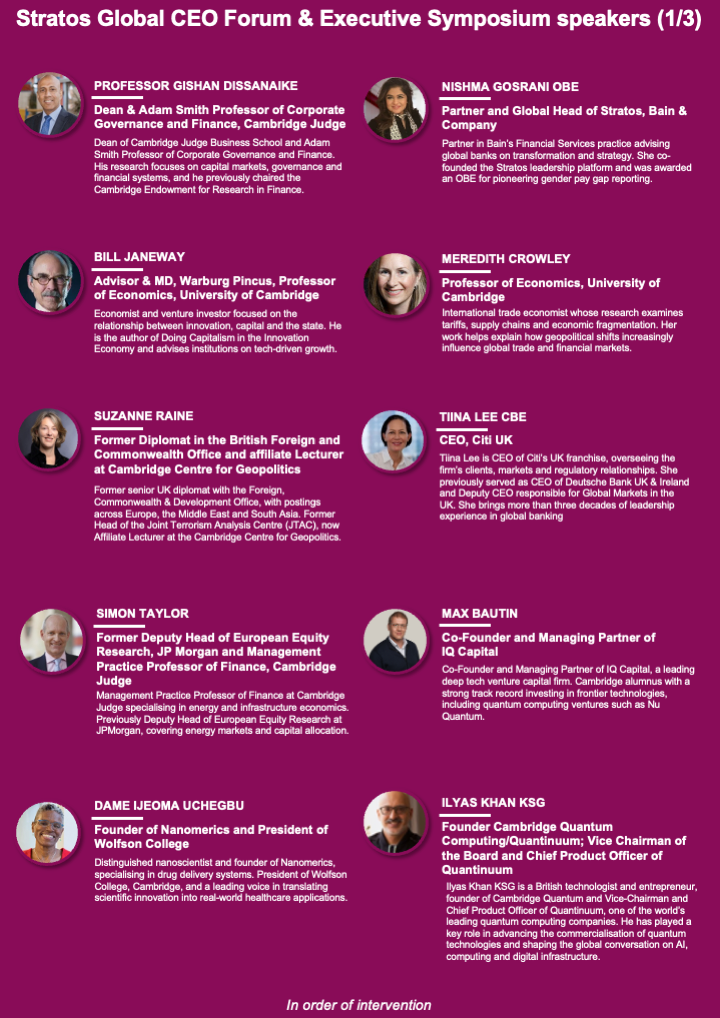
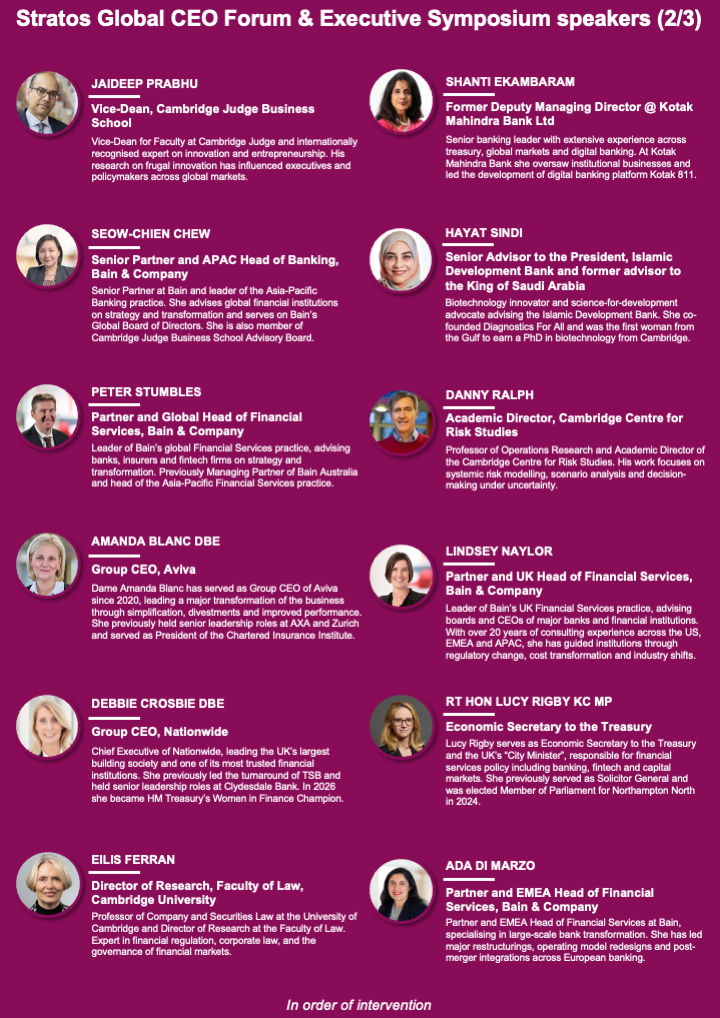
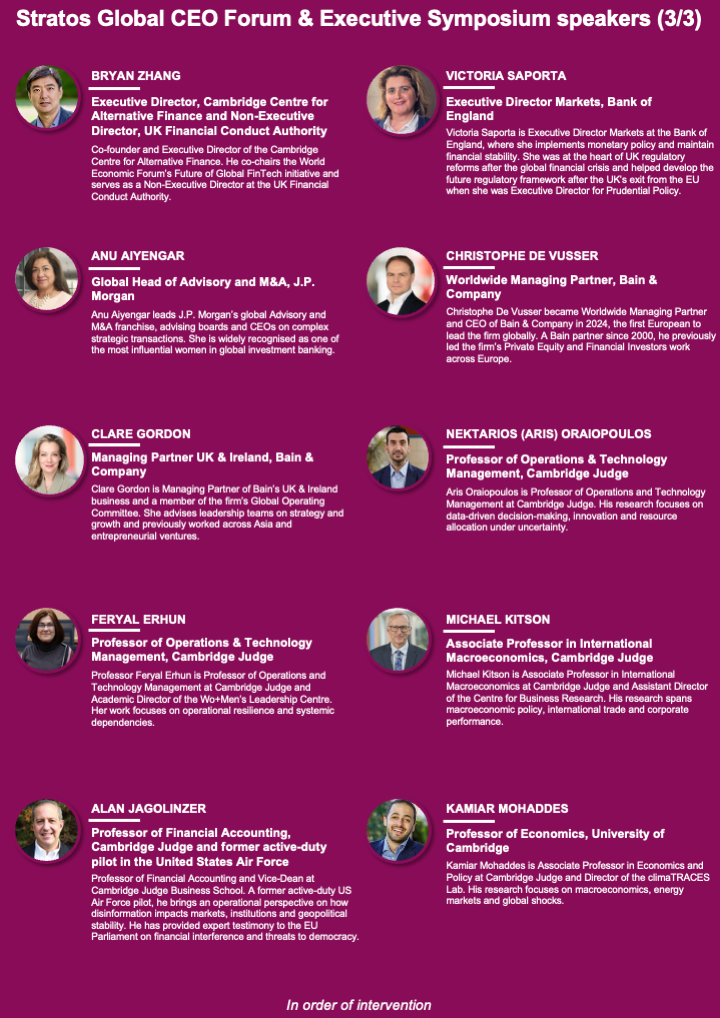
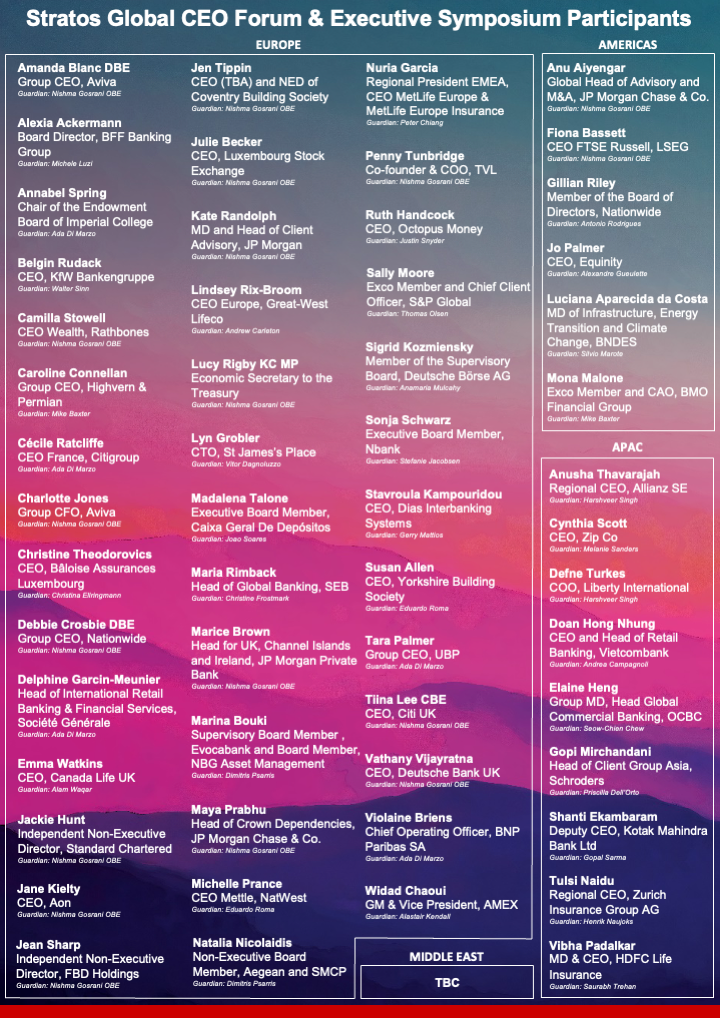
Stratos Global CEO Forum & Executive Symposium
Reimagining Growth 2.0: Power, Capital, and Leadership in a Fragmented World
University of Cambridge | April 23–24, 2026